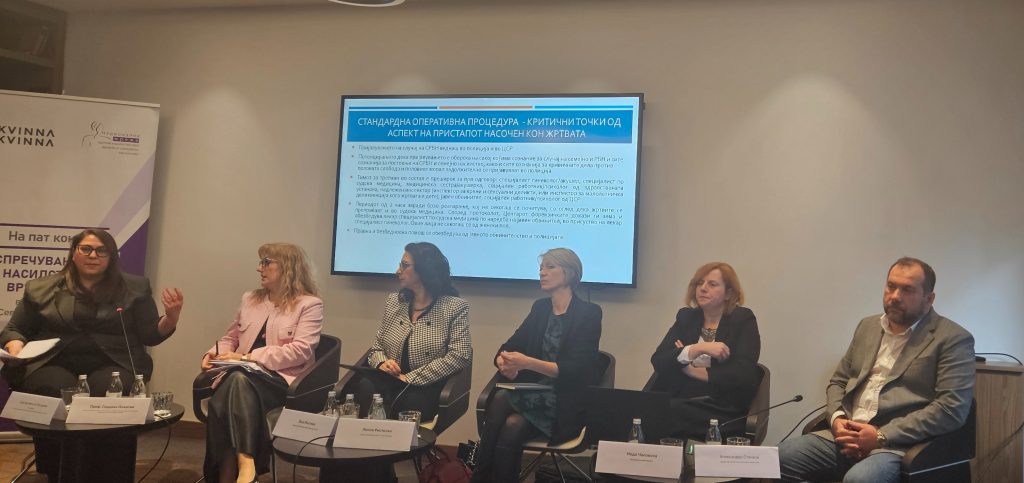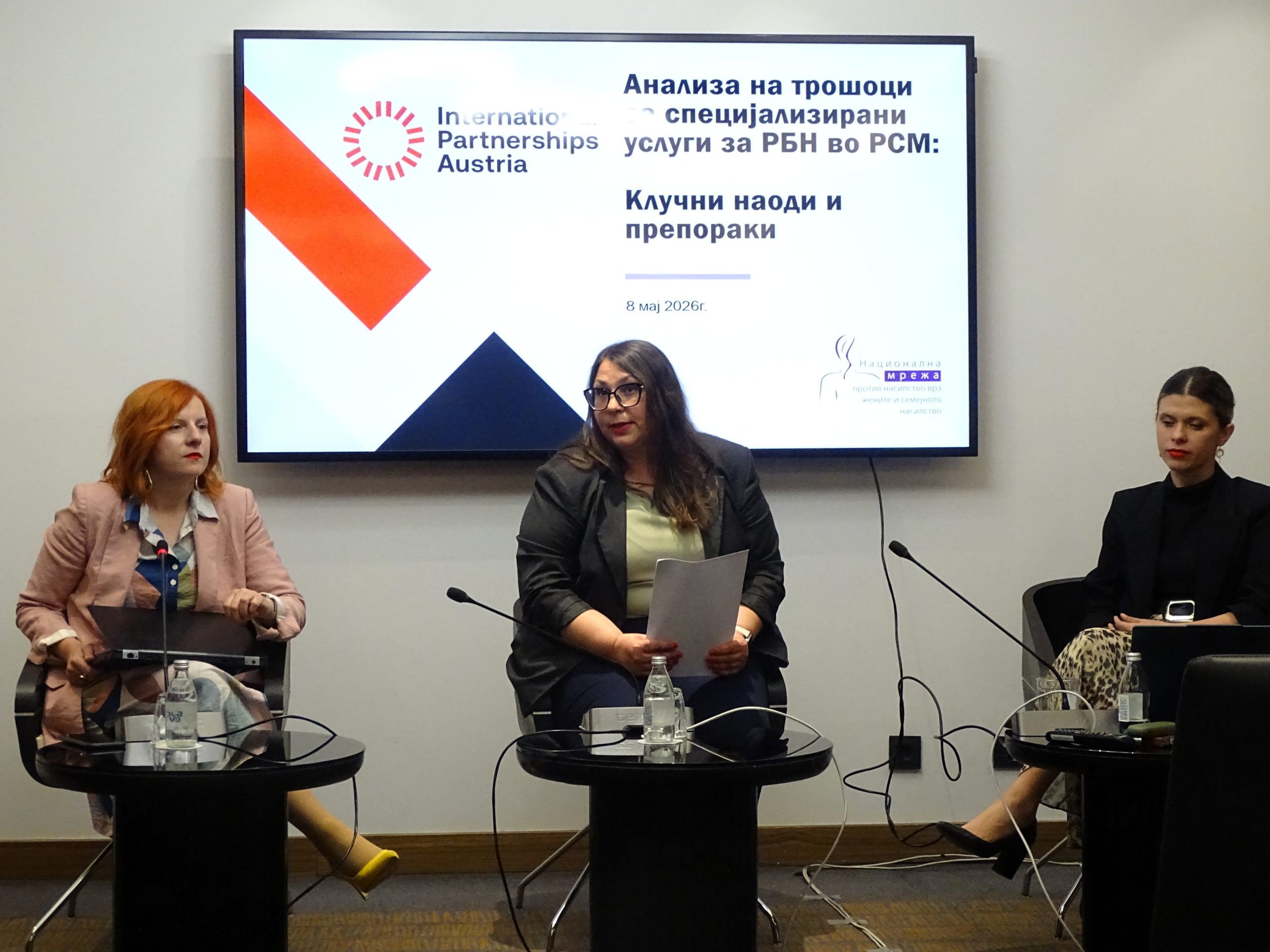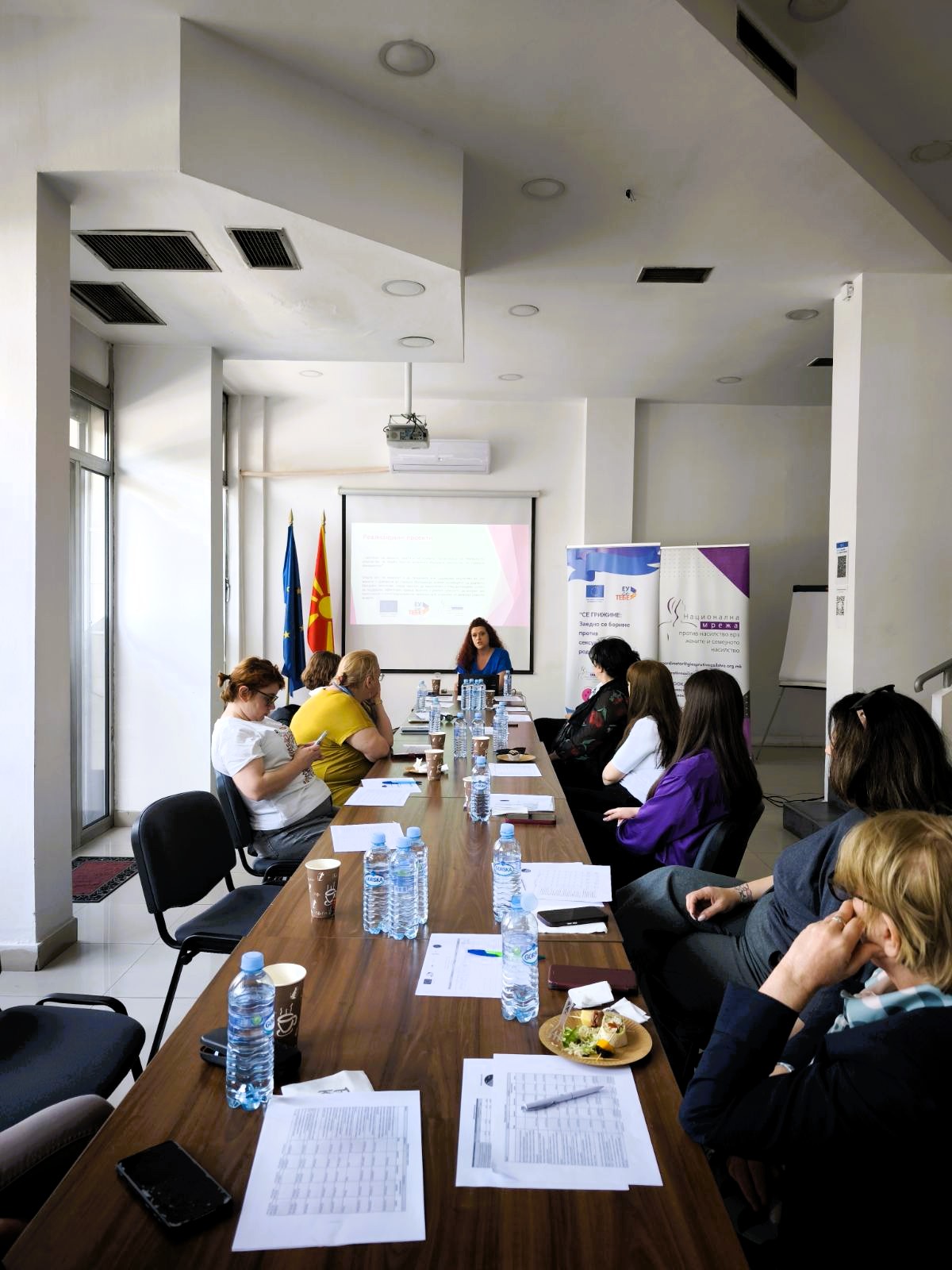
The expert debate on the topic “Is the victim-centered approach to collecting evidence in cases of sexual violence and rape respected”, which was held on March 28, 2025, pointed out the main challenges faced by both victims of sexual violence and rape, as well as the competent institutions. In dealing with these cases, solutions must be found that will enable the police, prosecutor’s office, court, and doctors to act legally, but at the same time prevent double victimization of the victim and her additional exposure to trauma.
“When we work on developing laws, strategies, and policies on violence against women, we must keep in mind one very important aspect – what are the needs of the victim at the moment she seeks help. Regardless of whether she initially turns to a civil society organization or to any of the relevant institutions, what she needs most and is willing to do should be the focus of the steps that will be taken, stressed Elena Dimusevska, director of the Network against Violence against Women and Domestic Violence.
Professor Gordana Lažetić from the Institute of Criminal Law and Criminology at the Justinian I Faculty of Law in Skopje, said that one of the possible ways to improve access to cases of sexual violence and rape would be to establish banks for storing forensic evidence, which due to their nature must be collected more quickly, and then the victim should be encouraged to report and be protected by the institutions. This should be achieved in an intersectoral manner and with the participation of civil society organizations.
Judge Olja Ristova, using examples from case law, pointed out the inconsistencies in the procedures. She said that the courts are obliged to respect the rights of victims, but in order to make a correct decision, the procedure must be based on legal and relevant evidence.
Prosecutor Lence Ristoska explained the procedure for reporting and collection of evidence in cases of sexual violence and rape and said that there is room for this procedure to be made easier for the victim, so that she does not have to give statements before all instances and for the system to be more efficient when dealing with such cases.
Neda Čalovska, an independent expert, said that the current system forces sexual violence to be reported to the police and public prosecutor’s office, by all institutions, including health workers and employees of referral centers for sexual violence, regardless of the victim’s will. The Istanbul Convention and GREVIO, which monitors the implementation of the convention, clearly indicate that all services, including the collection of evidence in a case, for example, of rape, should be provided to the victim, regardless of whether she currently wants or does not want to report the crime to the law enforcement authorities.
“The analysis showed that this approach directed at the victim has been taken by the majority of countries in the European Union and beyond. The practice of these countries shows that in cases of rape, forensic evidence is taken in accordance with the will of the victim and are kept for up to 2 years, a period that is left to the victim to decide whether she will initiate proceedings against the perpetrator,” Čalovska pointed out.
Aleksandar Stankov, Director of the Institute of Forensic Medicine, said that they must act in accordance with applicable laws, and if the legal solutions regarding the procedures are changed, they will be kept accordingly. He stressed the need for timely collection of physical evidence and its appropriate storage and processing.
Taking into account the fact that sexual violence, and especially rape, is one of the least reported and prosecuted forms of violence on the one hand, the recommendations of Grevio from September 2023, as well as the obligations undertaken with the ratification of the Istanbul Convention, the state has an obligation to respect the victim-centered approach and the approach based on the rights of victims. The debate was organized by the Network against Violence against Women and Domestic Violence.