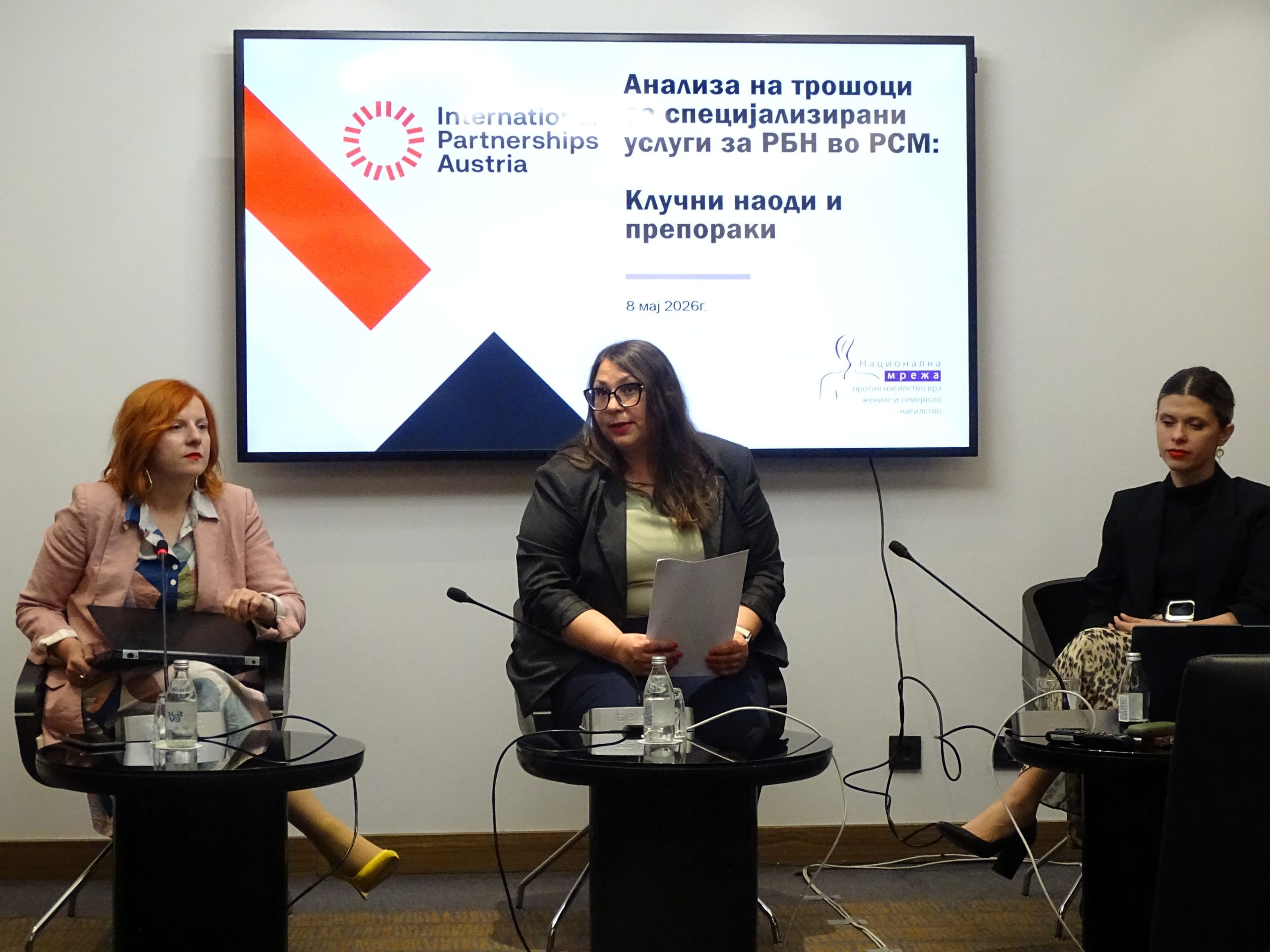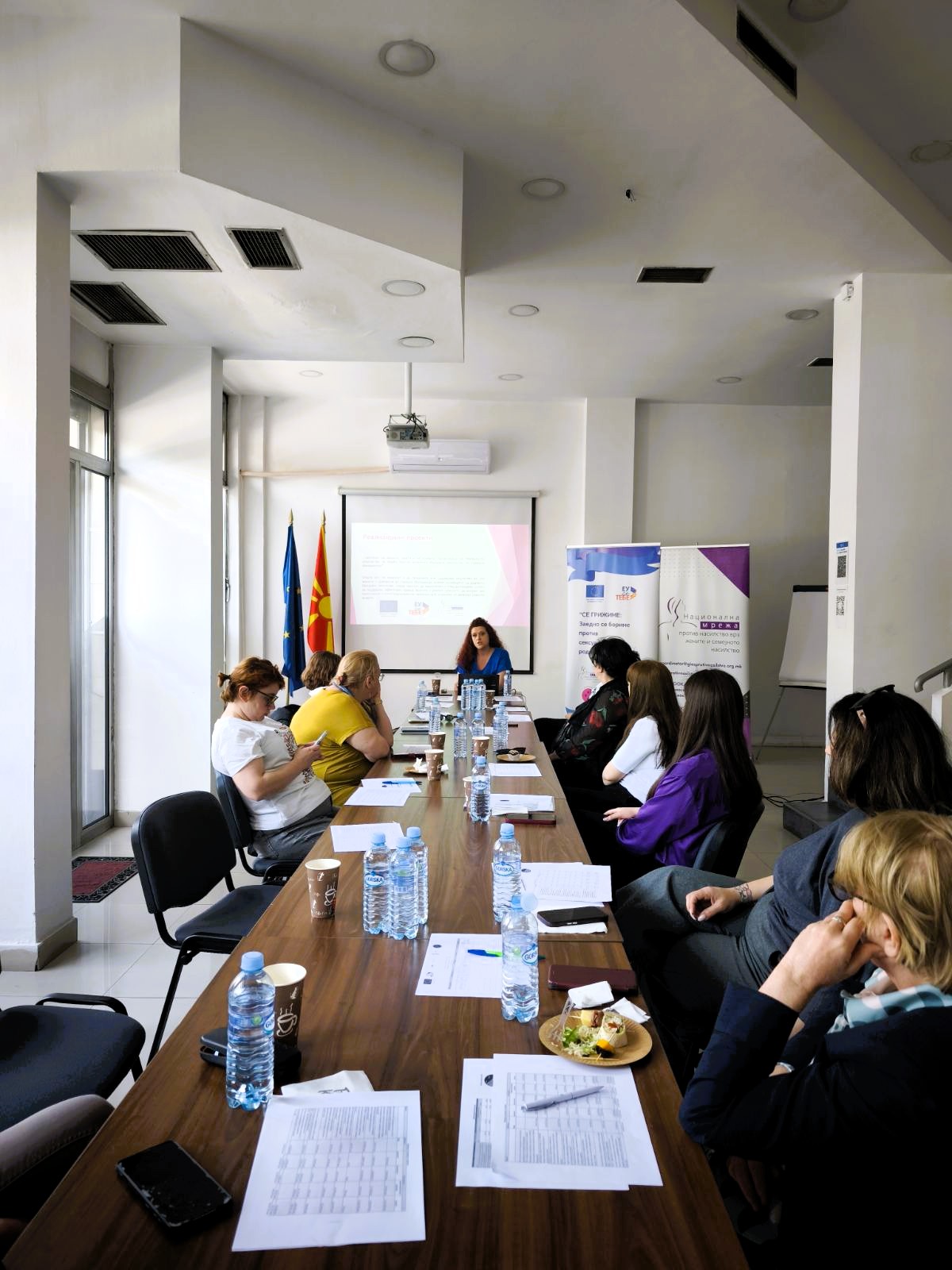
During October 2025, the National Network against Violence against Women and Domestic Violence organized four working meetings with mayoral candidates and holders of municipal council lists in the framework of the upcoming 2025 local elections, in the municipalities of Kumanovo, Prilep, Struga, and Bitola.
The meetings shared a common topic, objective, and format and were aimed at opening dialogue with political actors at the local level to improve the system of protection, support, and reintegration of victims of violence against women and domestic violence.
Local services as a key to effective protection
The discussions focused on the role of local self-government in ensuring accessible, high-quality, and sustainable specialized services for victims of violence. It was emphasized that services operating in line with the minimum standards of the Istanbul Convention enable rapid, free, and safe access to assistance and support for women and children in every municipality. However, their sustainability largely depends on financial and institutional support from local authorities and relevant ministries.
The meetings provided an opportunity to hear the candidates’ views on how they intend to contribute to improved protection and support for victims of violence in their municipalities, while also highlighting the need for these issues to be clearly integrated into local programs and policies, regardless of the election outcome.
The meetings were implemented in cooperation with local civil society organizations with long-standing experience in working with victims of violence and in local advocacy:
- Kumanovo – in cooperation with the Humanitarian Association Majka – Kumanovo
- Prilep – in cooperation with the Association for Legal Education and Transparency STATION L.E.T. – Prilep
- Struga – with the support of the civil society organization AKVA – Struga
- Bitola – with the support of the team of the Women’s Support Center – Bitola
This approach ensured that the meetings were grounded in the local context and the real needs of the communities.
The working meetings were attended by mayoral candidates and holders of municipal council lists from several political parties and coalitions, including SDSM, VMRO-DPMNE, Levica, VLEN, and ZNAM, as well as independent candidates and local initiatives. This diversity of political representation contributed to broader exchanges of views and opened space for building political accountability and alliances around issues related to the protection of women and children from violence.
The series of working meetings forms part of broader efforts to position violence against women and domestic violence as a local political priority and to encourage continuous dialogue between civil society and local decision-makers.
The activities are implemented within the project “Institutionalizing Quality Services for Rehabilitation and Integration of Victims of Violence II,” financed by the Austrian Development Agency (ADA) with funds from Austrian Development Cooperation, and implemented by the National Network against Violence against Women and Domestic Violence.