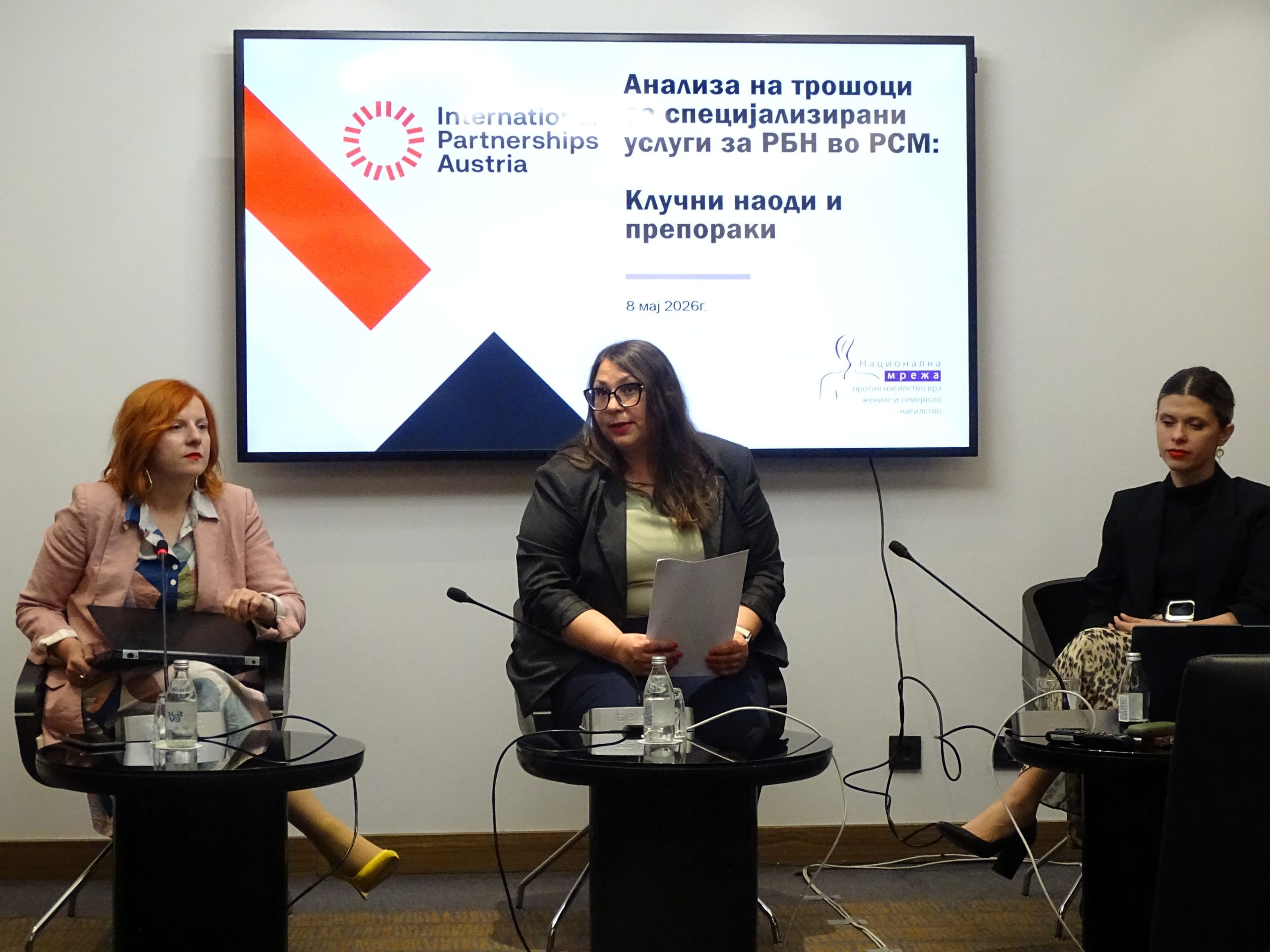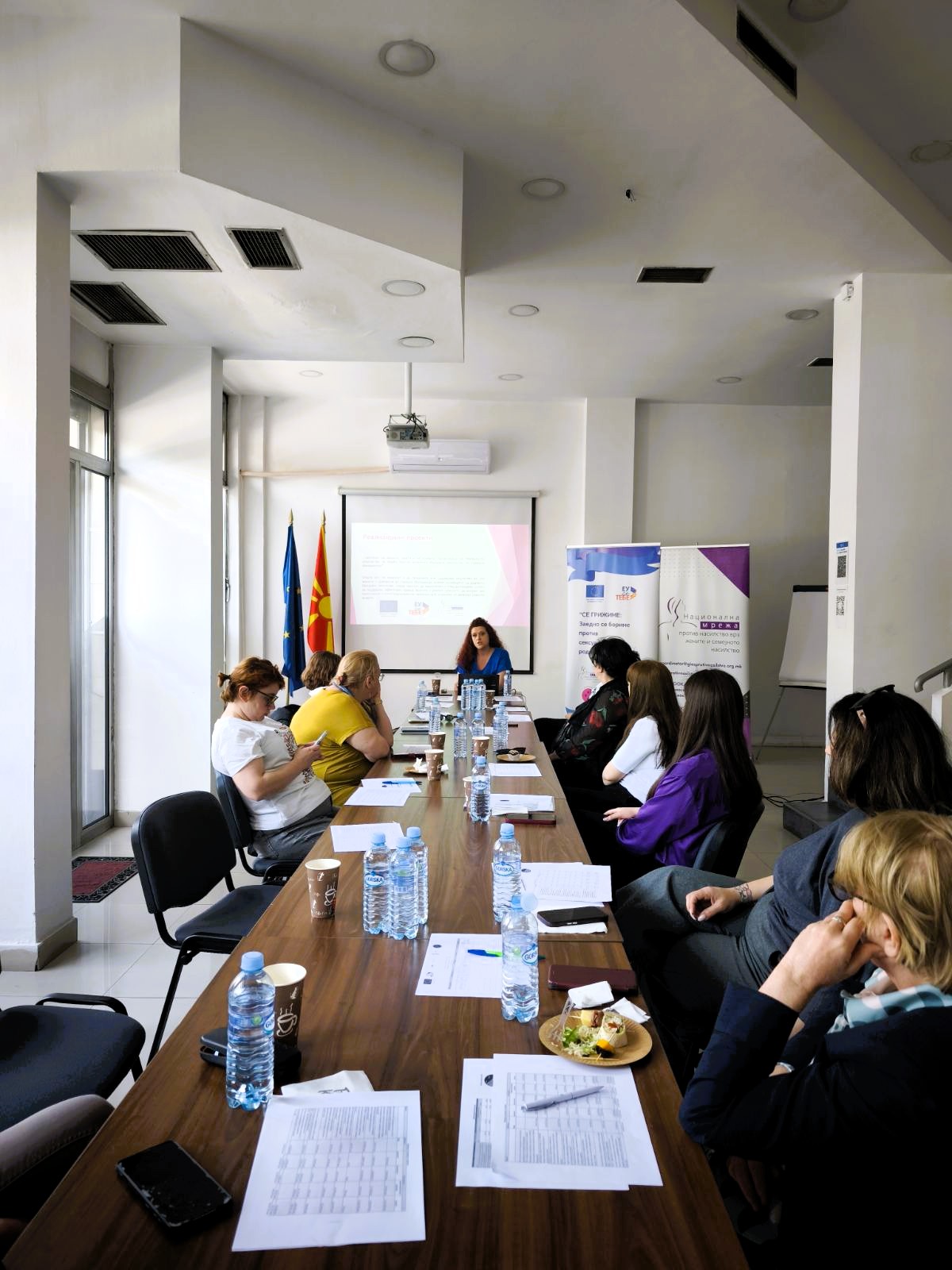
During December, immediately after the event for the presentation of the contribution to the UPR Report on the section on violence against women and children, we held the first meeting with civil society organizations where the findings of the report were presented, but joint steps to address the detected challenges were discussed. Namely, the team of the National Network participated in the preparation of the Report on the Universal Periodic Review of Human Rights for North Macedonia, together with 6 other organizations, as grantees of the Institute for European Politics – EPI Skopje.
The contribution to this report was shared with 17 representatives of civil society organizations at the initial meeting, which work in the field of gender equality and women’s rights, gender-based and domestic violence. The most affected by the findings and recommendations were primarily organizations that provide direct specialized services to victims of violence, both women and children. Their impression was that such findings have been repeated in the past 2 to 3 years, and that very little progress has been made in the system of protection against violence. From their organizational assessments and reports, the findings are similar, especially in the area of establishing and funding specialized services for women victims of GBV and DV. The other organizations that work on human rights, mostly gender equality, emphasized that human rights are not at all a priority of state institutions and that the state only makes declarative commitments, and we do not see substantial changes on the ground. Especially in gender equality, which began to recede with the rise of anti-gender movements in the past 2 years.
The discussion continued in the direction of the influence of anti-gender movements on gender-based violence and gender equality, especially the legal solutions that have not been adopted for these reasons. Namely, the anti-gender narrative creates fertile ground for the “normalization” of violence against women and the failure of institutions to act with due care for these reasons.
At the first meeting, next steps and a second meeting at the beginning of 2024 were agreed.
This activity was carried out with the support of the European Policy Institute (EPI) as part of the re-granting scheme “Human Rights in Practice”.